
Challenges and innovations in aerospace manufacturing and maintenance operations
2024-09-10
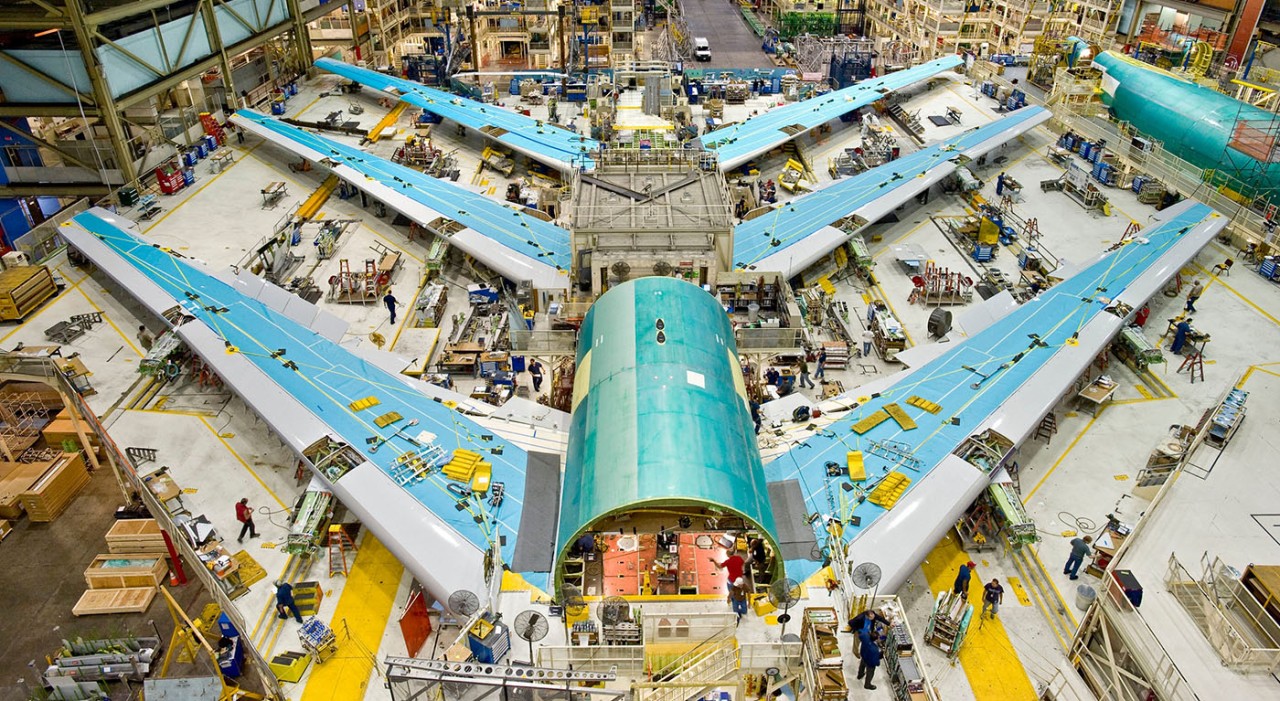

The commercial aerospace industry stands at a critical juncture, facing unprecedented challenges and opportunities. With a staggering backlog of over 15,700 aircraft orders, valued at approximately $ 1.8 trillion, manufacturers are under immense pressure to streamline operations and boost productivity. This backlog underscores the urgent need for innovative solutions to address longstanding inefficiencies in the production process.
Aircraft Manufacturing
The global aircraft manufacturing market was valued at approximately $ 750 billion in 2022. This sector is characterized by intricate processes, with a single commercial airliner comprising up to 6 million individual parts. The complexity inherent in manufacturing such sophisticated machinery often leads to production bottlenecks and inefficiencies. The cost of downtime is particularly steep, with estimates suggesting that unplanned downtime can cost automotive manufacturers up to $ 2,000,000 per hour. Furthermore, low utilization rates exacerbate these issues, highlighting the pressing need for process improvement throughout the supply chain.
Maintenance, Repair, and Overhaul (MRO)
While manufacturing forms the backbone of the aerospace industry, the ongoing maintenance and upkeep of aircraft are equally crucial for the sector's success and safety. The commercial aircraft MRO market was valued at approximately $62 billion in 2023. This sector deals with the maintenance, repair, and overhaul of commercial airliners, which is critical to ensuring safety and operational efficiency. MRO operations are vital for minimizing downtime, as delays in these processes can lead to substantial financial losses and operational disruptions. Maintenance costs can account for up to 15-20% of an airline's total operating costs, further emphasizing the need for improved efficiency in this area.
Some of the Key Challenges Plaguing both Aerospace manufacturing and MRO:
-
Production Inefficiencies and Downtime Aerospace manufacturing inefficiencies lead to an average of 300 hours of annual downtime per company on average. Resource idle time accounts for up to 20% of total available production time, significantly impacting productivity.
-
Lack of Real-time Visibility Limited visibility into production processes hinders accurate inventory assessment and production time prediction. Studies suggest that improving real-time visibility alone can result in a 10% improvement in overall equipment effectiveness (OEE).
-
Complex Supply Chain Management The aerospace industry relies on a vast network of suppliers. Airbus works with approximately 19,000 suppliers, sourcing a value of $49.4 billion, while Boeing collaborates with around 20,000 suppliers. Managing this intricate supply chain presents significant logistical challenges.
-
Tool and Equipment Tracking With millions of parts involved in aircraft production, efficient tool and equipment management is crucial. Inefficient tracking leads to time wasted searching for the right tools and potential production delays.
-
Work-in-Progress (WIP) Monitoring Lack of real-time WIP tracking contributes to production bottlenecks and inefficient resource allocation, impacting overall productivity.
-
Quality Control and Compliance Ensuring consistent quality and compliance throughout the manufacturing process is challenging without precise tracking and documentation, especially given the strict regulatory requirements in aerospace.
-
Safety Concerns In both manufacturing and maintenance environments, ensuring worker safety through restricted area access and real-time location tracking is crucial.
-
Production Scaling Challenges Manufacturers struggle to scale production efficiently to meet the substantial backlog of orders.
-
Technology Integration for SMEs Small and Medium-sized Enterprises (SMEs) in the aerospace supply chain face challenges in adopting advanced technologies due to cost and implementation complexities.
-
MRO Efficiency and Downtime Reduction Improving the efficiency of maintenance operations and reducing aircraft downtime during MRO processes is critical for airlines to manage costs and maintain schedules.
The Need for Innovative Solutions
These challenges collectively contribute to inefficiencies, increased costs, and potential safety issues across the aerospace industry. As the sector grapples with soaring demand and substantial backlogs, there's an urgent need for strategies to rapidly ramp up production in low-volume/high-complexity (LV/HC) environments and improve MRO operations. The Internet of Things (IoT) presents a transformative solution to these endemic challenges. By enabling real-time tracking of assets, predictive maintenance, and enhanced visibility into production processes, IoT has the potential to dramatically improve efficiency and reduce downtime. While the initial investment in IoT infrastructure can be substantial, with estimates ranging from $50,000 to $500,000 for a medium-sized facility, the long-term benefits in terms of increased productivity and reduced waste can yield ROI within 12-18 months.
Ultra-Wideband (UWB) Technology: A Game-Changer for Aerospace
Among IoT technologies, Ultra-Wideband (UWB) emerges as a superior solution for addressing critical aerospace industry challenges. While UWB hardware and installation costs are higher, its centimeter-level accuracy and ability to penetrate obstacles offer unparalleled advantages. Case studies have shown ROI periods of less than a year for UWB implementations in aerospace settings, making it an increasingly attractive option. Adoption by SMEs has still been lagging but this is set to change with easier to use and more affordable solutions hitting the market.
For example, Logidot is pioneering a proprietary mesh protocol that enhances battery-life on both anchors and tags, allowing for fully wireless deployments in days as opposed to many weeks or months. This allows a significant reduction in installation and maintenance costs but without sacrificing accuracy and reliability.
UWB Technology in Action: Transforming Aerospace Manufacturing and Maintenance
In manufacturing, UWB tags attached to tools, parts and equipment provide real-time tracking, ensuring that technicians spend less time searching for the right tool and more time on actual assembly. For instance, at Airbusr's manufacturing plant, UWB technology has streamlined tool management, reducing downtime and enhancing operational efficiency.
In the assembly of aircraft components, UWB technology is used to track work-in-progress (WIP). Each part, from the smallest bolt to the largest fuselage section, is monitored in real-time as it moves through the production process. This level of visibility has allowed manufacturers like Boeing to optimize their assembly lines, reducing bottlenecks and ensuring a smoother production flow.
For MRO operations, UWB technology provides solutions for efficient spare parts and tool inventory management. This has led to significant reductions in maintenance delays and improved service efficiency.
Worker and asset tracking is another critical application of UWB technology in both manufacturing and MRO operations. By knowing the exact location of personnel and equipment, tasks can be coordinated more efficiently, enhancing worker safety and improving overall operational effectiveness.
Conclusion
The aerospace industry faces significant challenges in both manufacturing and MRO sectors. UWB technology offers a powerful solution to many of these challenges, providing unprecedented accuracy in asset tracking and real-time visibility into manufacturing and maintenance processes. However, adoption has still been slow especially for SMEs mainly to infrastructure cost and deployment complexities.
A new generation of plug&play and affordable UWB-based solution, such as Logidot’s, are democratising access to realtime asset tracking and process optimisation and are shaping a more productive and cost-effective future for aerospace manufacturing and maintenance.
References:
-
Aircraft backlog keeps climbing. (2024, May 2). McKinsey & Company. https://www.mckinsey.com/featured-insights/sustainable-inclusive-growth/chart-of-the-day/aircraft-backlog-keeps-climbing
-
Z. M., & Research, Z. M. (2024, August 20). Aerospace and Defense Market Size, share, growth, analysis 2023-2030. Zion Market Research. https://www.zionmarketresearch.com/report/aerospace-and-defense-market#:~:text=In%20terms%20of%20revenue%2C%20the,the%20aerospace%20and%20defense%20industry.
-
Knisley Welding, Inc. (2021, June 2). How Many Parts are in an Aircraft? Knisley Welding. https://knisleyexhaust.com/blog/how-many-parts-are-in-an-aircraft/
-
The true cost of downtime 2022. (2023). In siemens.com. Siemens. https://assets.new.siemens.com/siemens/assets/api/uuid:3d606495-dbe0-43e4-80b1-d04e27ada920/dics-b10153-00-7600truecostofdowntime2022-144.pdf
-
Gerstl, J. (n.d.). How to Improve Manufacturing Productivity with Overall Equipment Effectiveness (OEE). GE Digital. https://www.ge.com/digital/tech/close-productivity-gap-overall-equipment-effectiveness-oee
-
2023 Airbus Annual Report. (2024, March 25). Airbus. https://www.airbus.com/en/2023-airbus-annual-report
-
Boeing Global. (n.d.). https://www.boeing.com/company/key-orgs/boeing-global
-
Why Ultra-Wideband matters | FIRA Consortium. (2023, September 11). FiRa Consortium. https://www.firaconsortium.org/resource-hub/blog/why-ultrawideband-matters
-
Let’s Connect: Digital Thread Advances manufacturing. (n.d.). https://www.boeing.com/innovation/innovation-quarterly/2022/10/let-s-connect-digital-thread-advances-manufacturing
-
Kuever, N. (2023, February 28). Airbus introduces the factory of the future - Bosch Digital Blog. Bosch Digital Blog. https://blog.bosch-digital.com/airbus-factory-future/
-
Portal Embraer. (n.d.). https://www.embraer.com/global/en/news?slug=20210412-embraer-and-decawave-collaborate-on-ultra-wideband-technology-for-aircraft-manufacturing